How to Create Your Own Character in Poly AI
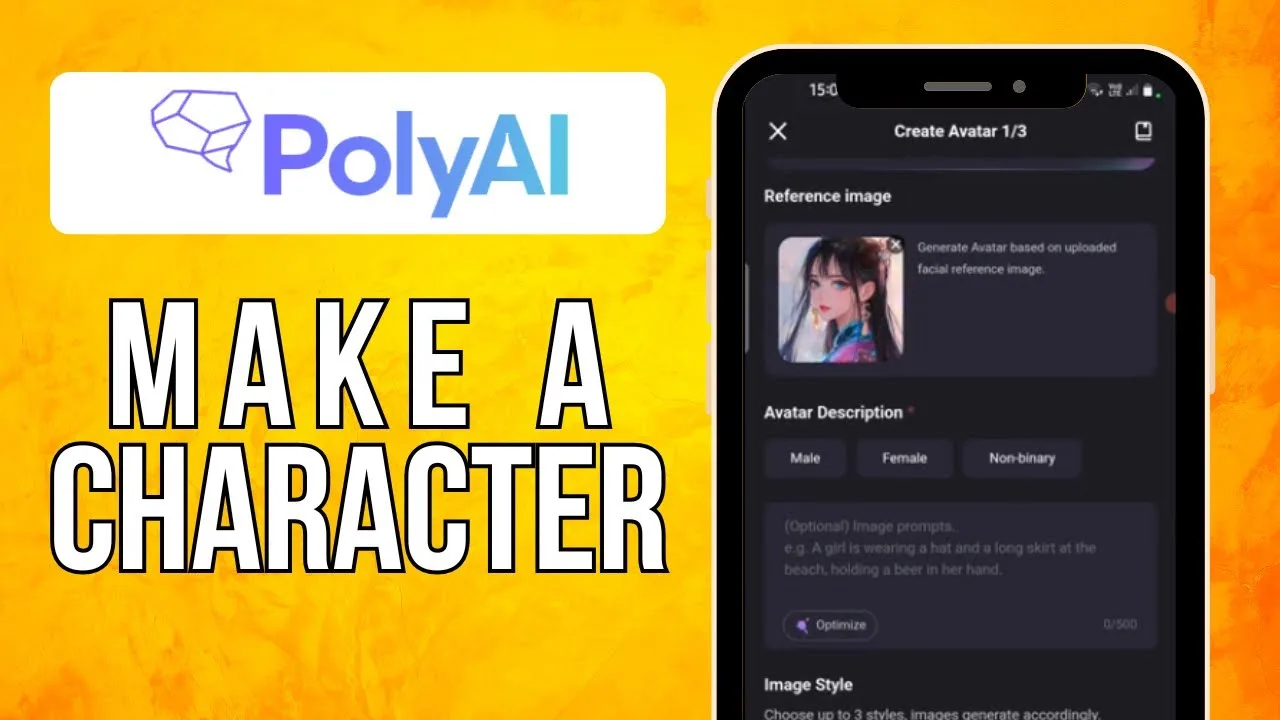
A character is a recipe with a face: a premise underneath, a personality expressed in behaviour, a greeting that stages the world, and examples that teach the model a voice. the Poly AI platform gives you the fields, and this guide teaches how to fill them so your character still sounds like themselves at message two hundred, not just message two.
You will build one character properly — premise first, personality as actions rather than adjectives, a greeting that opens mid-scene, and dialogue examples that do the heaviest teaching of all.
Bring an idea, however rough. Rough ideas are raw material; the method below is the refinery, and revision afterwards is not failure but the process working.
Premise in One Sentence
Compress the character to a line: who they are, the situation you meet them in, and the warmth or tension between you. 'A night-market fortune teller who speaks in riddles but keeps honest books' hands the model a world; 'an interesting mysterious person' hands it fog.
That line is the character's gravity. Test every later choice against it — their phrases, their setting, their first words — and cut anything that floats away from it, however charming the floating thing is.
Personality Written as Behaviour
Models perform behaviours far better than traits. Replace 'brave and kind' with what the character does: 'volunteers first and jokes while doing it', 'goes quiet and methodical when someone is hurt', 'cannot resist correcting a wrong date'. Behaviour lines survive long chats; adjectives evaporate by the weekend.
Add one flaw and one ritual. Perfection is unplayable, while a stubborn streak and a habit of arranging objects by size give the character edges for scenes to catch on. The creation fields themselves are toured in the Poly AI features guide for new users; this page governs what to write inside them.
The Greeting Opens Mid-Scene
The greeting is stage direction, voice sample, and invitation in a single paragraph. Open inside a moment — the stall at closing time, the rain beginning — with the character doing something and speaking unmistakably, ending on a hook the other person can answer.
Length is instruction: models mirror the scale they are shown. A rich greeting teaches rich replies; a two-word hello teaches a long, thin disappointment that users then blame on the platform.
Example Dialogue Teaches the Voice
Two or three short exchanges in the character's voice outweigh paragraphs of description, because examples are the model's native tongue. Show how they greet, deflect, tease, and turn serious — the situations a real chat will actually visit.
Keep examples varied and tight. You are minting a voice print, not pre-writing the story; the story is what the chat is for. Your side of the exchange matters too, and multiple characters and personas in Poly AI covers the selves you will bring to meet this character.
Facts That Must Not Drift
Anchor what the model may not improvise away: the character's role, the world's rules, the names that matter, the shared history the chat treats as settled. Stated plainly once, these hold; left implied, they are reinvented by Thursday.
State also what the character does not know. A fortune teller who has never left the market argues differently about the world than one who has, and limits on knowledge are characterisation at its cheapest.
Audition in Three Registers
Test the character in a cheerful chat, a conflict, and a quiet moment before settling or publishing. Characters are easy to love in the first register; the other two reveal whether the voice holds under weather, which is the entire test.
Revise one element per failed audition. Characters edited in layers accumulate a self; characters rewritten wholesale after every wobble never do.
Publish With an Honest Description
If the character goes public, describe it truthfully: premise, tone, who it suits. Honest descriptions attract the users who will love it and spare those who would not, which is the whole economics of public characters.
Expect strangers to find edges you never tested, and treat their chats as free auditions. A character maintained in public improves like software — version by version, on evidence.
One-line premise, behaviour instead of adjectives, a greeting that stages the world, examples that mint the voice. That is the complete craft of a character who lasts.
Your first character will be your teacher more than your masterpiece. Every later one will show the descent, and that is exactly how a body of work begins.
Keep the character's master file — premise, behaviour lines, examples, anchors — in your own notes beyond the app. The published character is a performance copy; the master is the manuscript, and manuscripts are what allow precise revision, confident restoration, and one day a worthy successor built without archaeology.
Expect the second character to take half the time and turn out twice as consistent; that acceleration is the true product of the first, and it is why this guide insists on finishing one properly rather than sketching five and finishing none.
Publish your second character with the confidence the first one's lessons bought, and notice what changed in your process: the premise arrived faster, the examples wrote themselves, the auditions were honest sooner. That acceleration, visible in your own hands, is the real graduation this guide can offer.