Poly AI vs Other Character AI Apps: An Honest Comparison

Character AI apps share a premise — converse with invented people — and differ in nearly everything that shapes an evening: where characters come from, whether you can build your own, how voice is handled, and how much control you hold. Poly AI chat platform sits in the community-library family with creation and voice in its toolkit, and this guide compares the families fairly so you can choose by fit instead of by download counts.
You will find the three broad models of character platform, their honest strengths and prices, and a matching method based on the user you actually are on an ordinary Tuesday.
No universal verdict exists here, and any source selling one is marketing. Fit is personal, and the categories are stable enough to reason with even as individual apps redecorate.
The Three Families
Community libraries host user-created characters in vast, uneven profusion — this app's family. Curated platforms offer a smaller shelf of official, polished characters with everything managed. Companion apps concentrate on one persistent partner rather than a cast at all.
The family decides the experience before any feature list does: abundance with variance, polish with limits, or depth with one. Know which you are downloading and most surprises — pleasant and otherwise — are pre-explained.
Characters: Abundance Versus Curation
A library contains your exact niche and a hundred rough drafts beside it; discovery skill is the admission price, which is why this library teaches search and audition as crafts. A curated shelf abolishes the search problem and the niche in the same gesture.
Used-bookshop readers thrive in libraries; readers who want the season's celebrated novel handed over thrive in curation. The honest self-knowledge of which reader you are outperforms every review ever written. The library method is taught in finding and discovering characters in Poly AI.
Creation: Audience or Author
Open platforms make authors of users: your character can exist tonight and be loved by strangers on Friday, and your craft grows in public. Managed platforms restrict creation to light templates or nothing, trading growth for tone and safety control.
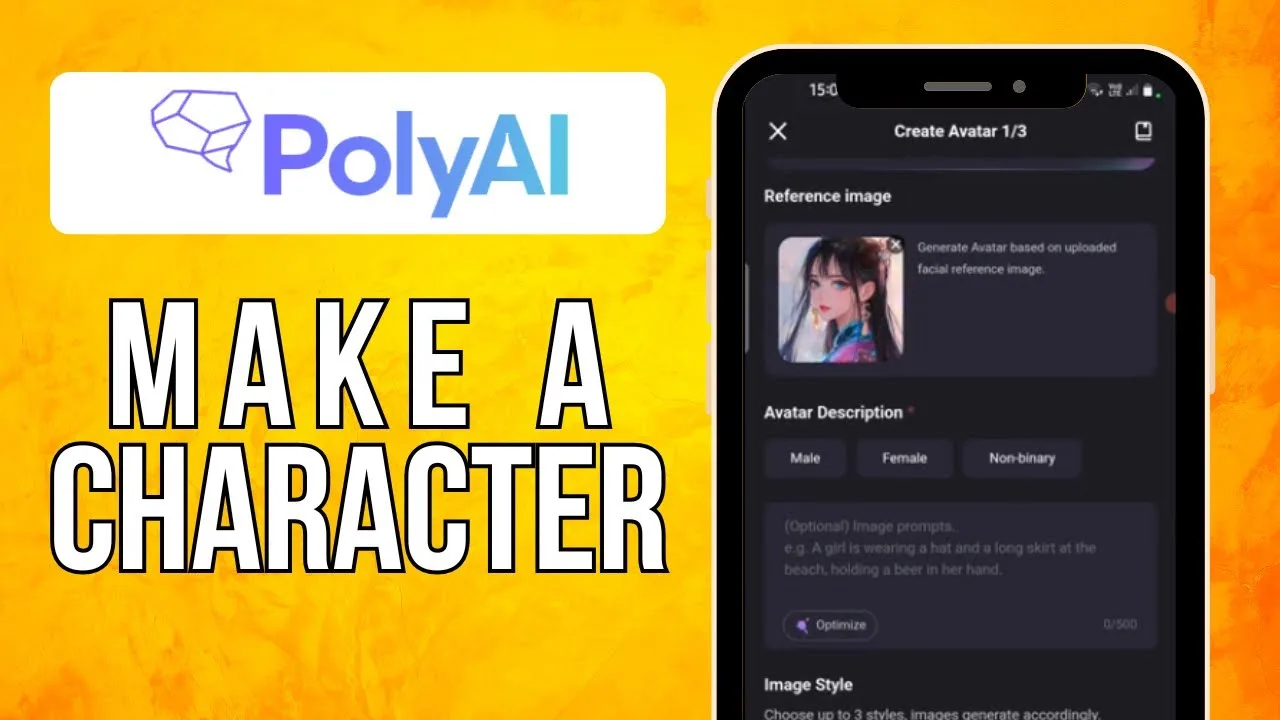
If a maker is hiding in you, the open invitation outweighs any feature comparison. The first step of that road is in creating your own character in Poly AI, and closed platforms simply do not have the road.
Voice and Presence
Voice support varies from absent, to narration of replies, to genuine two-way spoken scenes. If voice matters to you — and for many users it transforms the medium from correspondence into presence — weigh it as a headline criterion rather than a footnote, because families differ enormously here.
Judge voice in a real scene on your own phone and connection, not in a trailer. Presence is an experience, and experiences do not survive being read about; they must be sampled.
Control, Memory, and Settings
Open platforms tend to expose more user control — personas, settings, sometimes model choices — at the price of more homework. Managed platforms hide the machinery and guarantee a consistent, if fixed, behaviour.
Neither posture is a virtue in itself. Users who relax by tuning should not buy appliances with no dials; users who relax by not thinking should not buy a cockpit. Choose the posture that matches your temperament and your evenings stay pleasant.
Community Weather
Open communities are livelier, stranger, and more dependent on your block button; curated ones are calmer by construction. Both publish rules; the difference is how much weather the rules must handle and how often you will personally stand in it.
A user who loves a frontier town should not move to a gated village and complain about the quiet — nor the reverse. Community fit is emotional fit, and it outlasts every feature cycle.
The Matching Verdict
Choose the library — this app — for abundance, creation, voice, and control, accepting discovery and settings as the price. Choose curation for polish without homework. Choose a companion for one deep relationship instead of a cast.
Many users keep two homes: a managed app for effortless evenings, this one for projects and making. Platforms in this category are complements in rivals' clothing, and the mature user's shelf usually proves it.
Library or shelf, author or audience, cast or companion: answer those three and the download decides itself, whatever the charts are doing this month.
If you choose the library, welcome to the stacks. Bring your audition habits — the collection rewards them nightly.
Prices, catalogues, and models will all change within the year; the three questions in this guide will not. Keep them, and every future announcement — including this app's own — can be evaluated in an afternoon instead of a month of drifting trials.
Keep literacy in the other families even after choosing. An evening in a curated app teaches polish your library work can borrow; a companion's depth teaches focus your cast can imitate. Categories compete in marketing and collaborate in a practitioner's education.
Whichever door you enter tonight, enter it with tonight's need named aloud: a cast or a companion, making or relaxing, voice or prose. Tools chosen by named needs rarely disappoint; tools chosen by habit disappoint on schedule, and blame the apps for what was only ever a mismatch of evenings.
Fit first, fame last: that order has never yet chosen wrong.